

I Ruthlessly Decluttered My 80-Year-Old Parents' Home – and Discovered the Story of Their Lives Amid the Chaos.
Update: Kevin and I are going Live on Facebook on Thursday, July 24 at 9:00am from inside his transformed home! ABCs of Home Organization FB Community
Kevin had a huge job on his hands but he’s on the home straight now.
Punteha at Homes & Gardens interviewed Kevin (current client) and me for this article. Original article link.
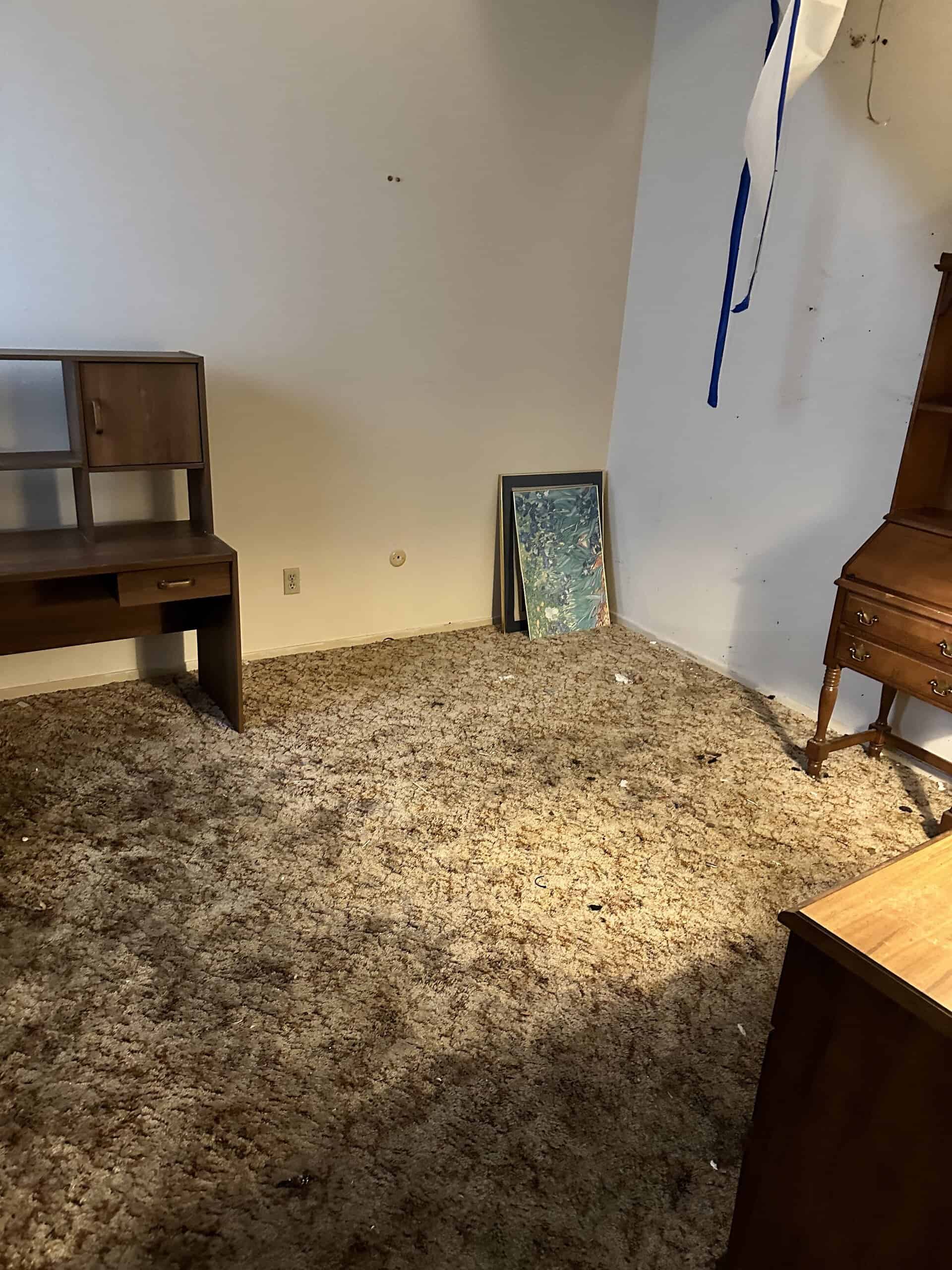
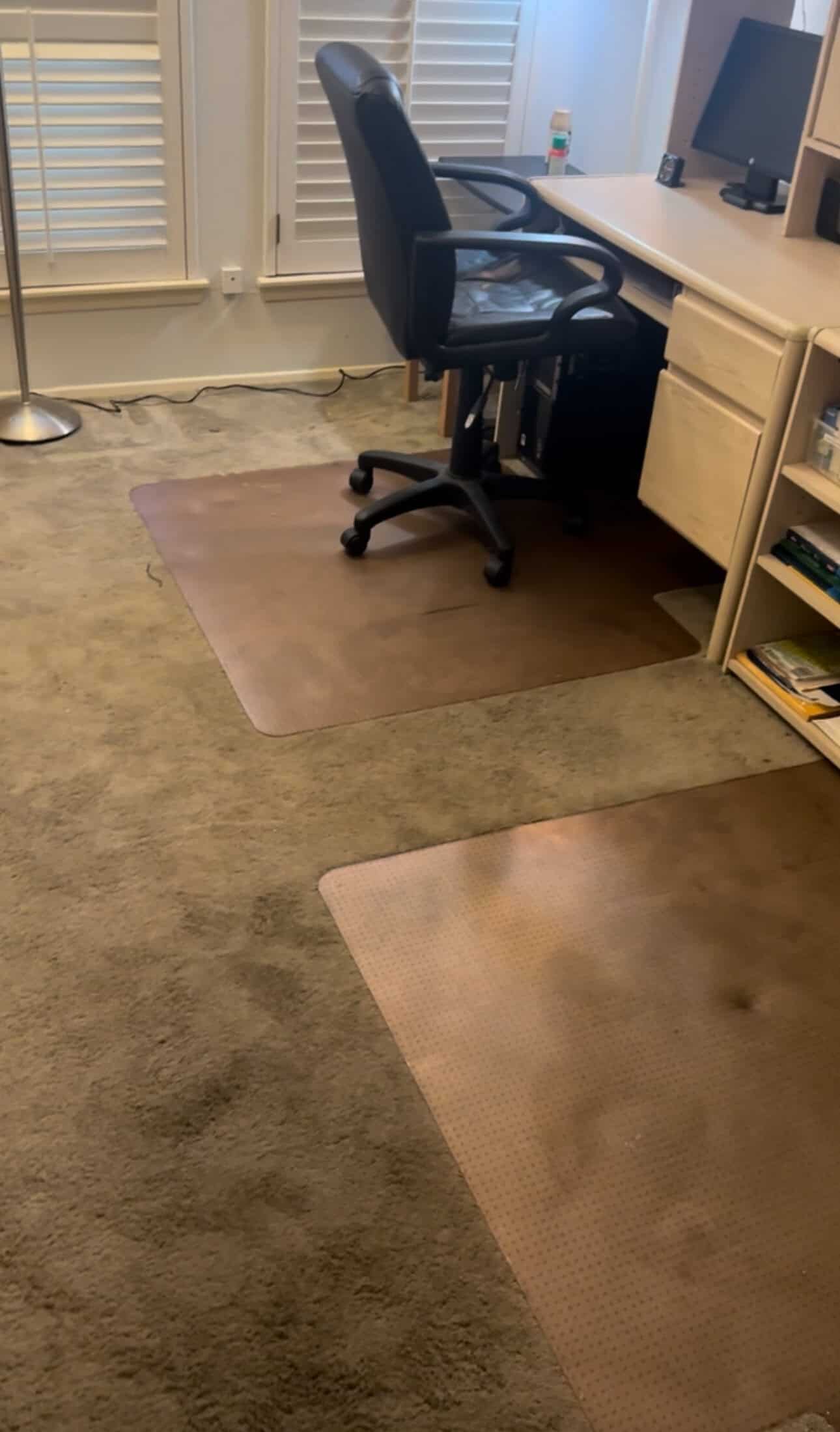
*The article below: affiliated links removed + added before and after photos of the house*
Homeowners in their 80s have had a glorious lifetime to accumulate a lot of belongings, and ruthlessly decluttering can be very challenging. The home of Kevin’s parents, high school sweethearts, Shirley and Bill, was no exception.
Together for 65 years, and in their Houston, Texas house for over four decades, a difficult and shared decline with dementia led to the clutter in their home not only spiraling out of control, but becoming a daily risk to their well-being.
That’s why Kevin took early retirement and left his life in California, moving home to support his parents and painstakingly working on decluttering the whole house. Here are some of the crucial lessons learned along the way.
Why decluttering in your 80s can be so challenging
 Professional organizer and owner of Soulstice Living Stephanie King helped Kevin on his streamlining journey and shares some of the decluttering challenges that can arise in this chapter of life.
Stephanie says, ‘Clutter impacts people in their 80s in multiple ways, including the sheer volume. Most have also inherited entire households from parents, siblings, or other relatives, whilst very little has been let go of along the way.’
If you struggle to let go of sentimental items, you’ll know the feeling well.
 Stephanie describes Shirley and Bill’s home as ‘a classic baby boomer’ one, adding that it reflected ‘the values of a generation raised by Depression-era parents.’ This can manifest as cabinets filled with things that are perceived as ‘too good to throw away, leading to a household containing two to four times the volume of belongings as someone in their 30s.’
She notes this buildup isn’t only due to a lifetime of accumulation, but also about habits as most people have never done a full-house audit and leave areas untouched for decades.
Kevin shares, ‘The house had become a sad reflection of my parents’ decline and my limitations as their only child and caretaker. I tried to manage it alone for years while working full time, but progress never felt permanent. I’d tidy one area only for the chaos to spread back in.’
When Kevin’s father passed away, the organizing of the paperwork Kevin had been chipping away at became a blessing during the difficult time. He says, ‘I was already overwhelmed, but the decluttering I’d started meant I could locate critical papers and photos quickly: Vital for making funeral arrangements and supporting Mom. That experience motivated me to get serious and hire a professional organizer to finish decluttering their home.’

Bob and Shirley were high school sweethearts, and were together for 65 years
Stephanie stepped in to help Kevin deal with the physical and mental load of his parents’ home, which was compounded by his ADHD and difficulty concentrating.
Kevin, an only child, adds, ‘My parents consistently refused to admit they needed help. Fiercely independent, they tried to buy a new car after I took away their keys. When I suggested a memory care facility, Mom, a former professor of home economics, called the police.
‘Before dementia, Mom ran the household with precision, whilst Dad had run a graduate-level science program. But over time, there were unpaid bills, utilities cut off, and clutter piling up. Magazines and mail covered the floors and tables, and Mom fell more than once because of it.’
With Stephanie’s help, Kevin was able to make headway within his parents’ home in five key clutter categories, and she reminded him, ‘it took decades to accumulate this stuff; it won’t be resolved in a weekend.’
1. Paper clutter
 Kevin enjoyed rediscovering old things but found paperwork hard to say goodbye to. He explains, ‘Purging documents was tough as my legal background made me fear discarding anything important. The hardest part was decision fatigue, and that’s where Stephanie’s support really mattered.’
Sometimes, you really do have to call the pros.
Stephanie recalls two rooms stacked with waist-high paper, sharing, ‘We couldn’t bulk toss the paper, like we did with the linens or Mama Shirley’s older clothes. We had to sort through every single piece of paper as old mail was mixed with critical tax returns, house deeds, diplomas, personal letters, and more.’
It was a tedious and slow task. ‘Unlike a room full of physical items,’ Stephanie says, ‘the progress isn’t visually dramatic when you’re organizing important paperwork, and it can make decluttering seem never-ending.’
Together, the pair spent more than 60 hours reading, filing, or shredding.
Stephanie adds, ‘Kevin bought two file cabinets for his office, which led to recycling about 85% of the papers, and creating a streamlined filing system for the remaining 15%.
2. Untouched supplies
 Shirley was a serious hobbyist and had not only a designated sewing room packed with supplies but a closet overflowing with gifting materials, too.
Kevin had no emotional attachment to 99% of these items, making the discard process easier. He kept only a sewing table, a Singer machine (available at Walmart), and his mom’s sewing stool.
The space cleared allowed Kevin to have a DJ room, keeping his family’s strong love of hobbying going.
3. Kitchen tools and cookware
The pair set to work on decluttering the kitchen and donated 60% of the contents, including five sets of china, goblets, gadgets from the 80s, plastic items, decorative kitchen bowls, and serving trays.
‘Kevin loves cooking, so this one was a fun area for him,’ Stephanie says. ‘He kept two sets of China, functional cookware, his favorite bakeware, and a few sentimental pieces that his mother always had out during the holidays. It was easy for him to release the outdated items that took up a lot of room.’
Afterwards, Kevin was left with a highly functional space that was free from duplicates and was organized efficiently to make cooking a breeze.
Kevin shares, ‘This was the last place where our extended family gathered regularly, and I’ve tried to keep that tradition alive at holidays despite the loss of family and friends.’
4. Memorabilia and knickknacks
 With multiple living areas, wall shelving, and walk-in closets, the house had a lot of storage space filled to the brim.
Steph says, ‘Kevin kept a few childhood keepsakes and placed his mom’s favorite items around her main chair, where she spends most of her days. A handful of sentimental items went on the living room shelves, but the rest were donated or sold.
‘This was slightly more difficult for Kevin as he had stories for a lot of the items, and went down memory lane.’
For anyone who has difficulty parting with items or are sentimentally attached but restricted on space, Stephanie advises taking photos. ‘Make an album of your favorites or even print a photo book,’ she explains. ‘This allows you to take your past with you to wherever you go.’
5. Genealogy
Kevin kept everything related to family history as he plans to write a book about his dad and both sides of his family. He says, ‘For me, the house holds vivid memories of my parents in their prime. I often edited Dad’s publications on the patio during visits and watched Mom dive deep into family genealogy and community events.’
The hundreds of photos in Shirley and Bill’s house were scattered loose all over, with others in albums. There were many boxes of genealogy research, clippings, and slides.
Stephanie says, ‘Photo organizing is another daunting and time-consuming task. Placing the photos in chronological order, digitizing, categorizing the photos of mom and dad, and known relatives or locations.’
The pair categorized the photos by placing ‘like with like’ and repurposed empty bankers’ boxes and file containers to neatly store the genealogy material in Kevin’s office.
Stephanie adds, ‘It’s all ready for the day Kevin is ready to tackle his book project.’
When sorting through photos, first quickly sort into two piles: Trash and keep. Stephanie’s favorite decluttering method is ‘to sort as you touch it the first time’, also known as the one-touch tidying rule.
‘Buy a few photo bins or use shoe boxes and create your categories,’ she says. ‘This can be by decade, friend groups, vacations, etc. On your first big sort, reduce the quantity and sort into broad categories.’
The Results
‘Decluttering is essential to enjoying life with someone at mom’s stage of life,’ says Kevin. ‘For me, this process has always been about restoring daily balance, making space for joy, for care, and for moving forward. It’s also helped us reconnect with loved ones. Research shows that staying socially connected is vital to seniors’ well-being, and I hope keeping a warm, orderly home helps Mom stay connected and be as happy as possible in her home.
‘It’s been essential to start a new chapter for me, too. It’s been difficult as anticipated, but freeing. Mom turns 90 this month, and we’ll celebrate with friends and family a home. ‘
The special party will be at Shirley’s home on July 26, with 40-50 guests.
‘Friends, neighbors, past caregivers, and family are all coming,’ Kevin shares. ‘It hit me recently: Mom has lived an extraordinary life, married for 65 years, but has not had a party in her honor since her wedding. So we’re going all out to celebrate this occasion properly.’
FINAL “Party” Photos revealed on our Live Call on July 24 at 9am!


Discover more from Soulstice Living
Subscribe to get the latest posts sent to your email.



Congrats